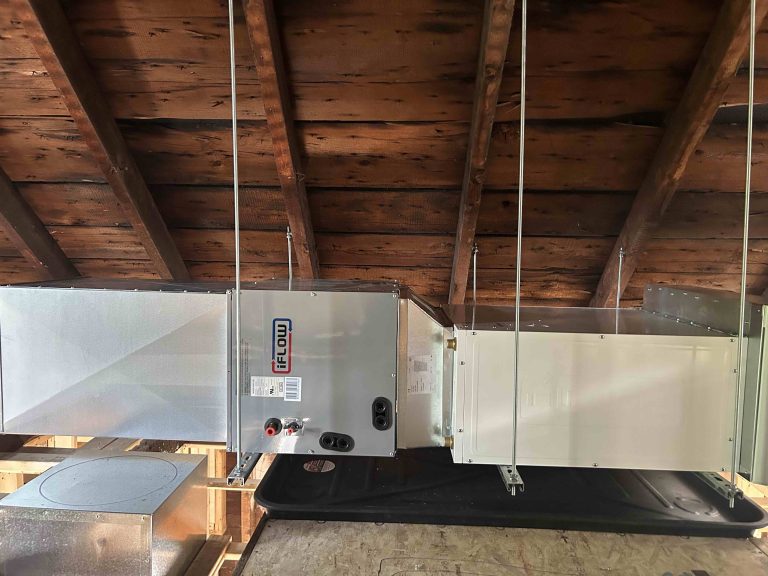

What Is a Small Duct High Velocity System?
A small duct high velocity system uses flexible tubing approximately two inches in diameter rather than the standard six-to-twelve-inch rectangular sheet metal ducts found in conventional HVAC installations. The air handler pushes conditioned air through these compact tubes at a much higher velocity than traditional setups. This increased velocity allows the smaller ducts to deliver the same volume of conditioned air throughout your home, making it an excellent alternative to standard AC services for unique floor plans.
The supply outlets are small, round vents that can be placed in floors, ceilings, or walls with minimal visual impact. The high velocity airflow creates a phenomenon called aspiration, where the conditioned air mixes rapidly with room air, eliminating the hot and cold spots that plague many conventional systems. Studies from the Department of Energy have shown that SDHV systems can remove up to thirty percent more humidity than traditional systems, making them particularly effective for those seeking relief in Chelmsford, MA and surrounding communities.
Why Small Duct High Velocity Is Ideal for Older and Unique Homes
Many homes built before 1960 feature plaster walls and ornate moldings that homeowners understandably want to preserve. Running conventional ductwork through these structures often means tearing into walls or building soffits that compromise the character of the home. The two-inch flexible tubing used in SDHV systems can be threaded through existing wall cavities with minimal disruption. For homeowners with no existing ductwork at all, we also frequently recommend ductless HVAC solutions as a complementary option.
We are a family-owned and locally operated business committed to honest, upfront pricing. Our teams have extensive experience routing SDHV ductwork through challenging structures, including historic colonials and multi-story Victorians. As an HVAC contractor serving Westford, MA and surrounding areas, we understand the unique construction methods used in local homes and carefully plan each installation to avoid damage to existing finishes.
Energy Efficiency and Performance Benefits
As a Mass Save certified contractor, we specialize in energy-efficient retrofits that help homeowners reduce costs while improving comfort. SDHV systems align perfectly with this mission. The insulated flexible ducts significantly reduce energy losses compared to traditional sheet metal ductwork, which can leak air at connection points. Our expertise in modern energy solutions means you can trust us to deliver quality work for residents in Littleton, MA and nearby areas.
The superior dehumidification capability of SDHV systems means your air conditioner does not need to work as hard to maintain comfortable conditions. When indoor humidity is properly controlled, you can often set your thermostat a degree or two higher while still feeling perfectly comfortable, which translates directly into energy savings over the course of a cooling season.
Applications Beyond Historic Homes
While older homes are the most common candidates, these systems serve many other applications effectively. Homeowners choose small duct high velocity for a variety of scenarios:
- Home additions and sunrooms where extending existing ductwork is impractical.
- Finished basements and attic conversions that lack the framing space for conventional ducts.
- Condominiums and townhomes with limited mechanical space.
- Post-and-beam construction where exposed structural elements prevent standard duct routing.
- Radiant floor heating where owners need a cooling solution without massive renovations.
Getting Started with Your SDHV Installation
Every home presents unique challenges, which is why proper planning is essential to a successful professional AC installation. We offer free estimates and begin each project with a thorough assessment of your home’s construction and insulation levels. We perform detailed load calculations to ensure the system is properly sized for your specific needs.
If you have been told your home cannot have central air conditioning or are tired of living with inadequate cooling, contact Aura Heating & AC today. We provide system design and installation in Ayer, MA and nearby towns to help you transform your comfort. Reach out today to schedule your consultation and learn more about our high-velocity solutions.