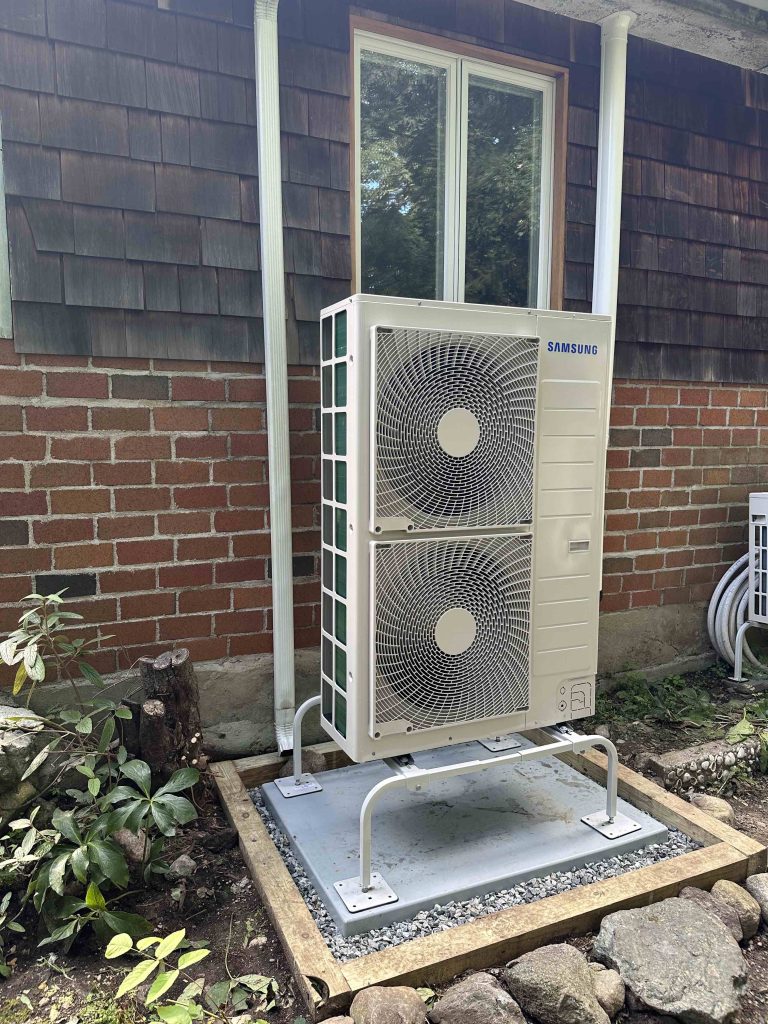

The global heat pump market has grown dramatically, with the International Energy Agency reporting a 10% increase in heat pump sales worldwide in recent years. Air to water systems are particularly popular across Europe and are now gaining serious traction in the northeastern United States, where cold winters and rising energy costs make efficient heating solutions a top priority. We are a family-owned and locally operated business committed to honest, upfront pricing with no hidden fees, and we take pride in helping homeowners navigate this growing technology with confidence.
How Air to Water Heat Pumps Work
The core process behind an air to water heat pump involves a refrigerant cycle that captures thermal energy even from cold outdoor air. The outdoor unit draws in ambient air and passes it over an evaporator coil containing refrigerant, which absorbs the heat and transitions from a liquid to a gas. A compressor then increases the pressure and temperature of that gas significantly. The superheated refrigerant flows through a heat exchanger where it transfers its energy to a water circuit before condensing back into liquid form and cycling through again.
Modern air to water heat pumps can operate efficiently in temperatures well below freezing, with many units rated for performance down to minus fifteen degrees Fahrenheit or lower. The heated water produced typically ranges between 95 and 140 degrees Fahrenheit, depending on the system design and distribution method. This makes the technology highly compatible with radiant floor heating, which operates optimally at lower water temperatures, as well as with properly sized radiators and hydro-air handlers that distribute warmth through ductwork.
Key Benefits for Homeowners
Choosing an air to water heat pump provides a range of practical advantages that go beyond simple heating. These systems can also provide domestic hot water, reducing or eliminating the need for a separate water heater. Many models offer cooling capabilities as well, circulating chilled water through the same distribution system during summer months. Here are some of the most compelling benefits:
- Energy efficiency that can deliver two to four units of heat for every unit of electricity consumed, dramatically reducing operating costs compared to oil or propane boilers
- Reduced carbon footprint by eliminating on-site combustion of fossil fuels and leveraging an increasingly green electrical grid
- Versatile integration with existing hydronic heating systems, making them ideal for retrofits in older homes that already use radiators or baseboard heaters
As a Mass Save certified contractor, we specialize in energy-efficient retrofits and upgrades that help homeowners reduce energy costs while improving comfort. This certification means we can guide you through available rebates and incentive programs that significantly offset installation costs, making air to water heat pumps more accessible than ever.
Ideal Applications and Use Cases
Air to water heat pumps are particularly well suited for homes in Westford, Chelmsford, Littleton, Tyngsborough, Acton, Lowell, & Dracut, MA that currently rely on oil-fired or propane boilers. Because these systems produce hot water for distribution, they can often connect directly to existing hydronic piping, minimizing the disruption and expense of a full system replacement. Homes with radiant floor heating benefit enormously because the lower supply temperatures required by in-floor systems align perfectly with the heat pump’s most efficient operating range.
New construction projects also benefit from air to water technology. Builders designing high-performance homes can specify a single system that handles space heating, cooling, and domestic hot water production. This consolidation simplifies mechanical rooms, reduces equipment footprint, and streamlines maintenance. Our expertise in modern energy solutions means you can trust us to deliver quality work that makes a real difference in your home’s performance.
Planning Your Installation
Proper system sizing and design are critical to maximizing the performance of an air to water heat pump. We conduct thorough heat load calculations that account for your home’s insulation levels, window performance, square footage, and local climate data. Factors we evaluate during your consultation include:
- Existing distribution system compatibility and whether modifications are needed for optimal performance
- Domestic hot water demand based on household size and usage patterns
- Electrical service capacity to ensure your panel can support the new equipment without costly upgrades
We offer free estimates and encourage homeowners to reach out early in the planning process. Whether you are replacing an aging boiler or designing a new home, an air to water heat pump could be the ideal solution for efficient, comfortable, and sustainable heating for years to come.